

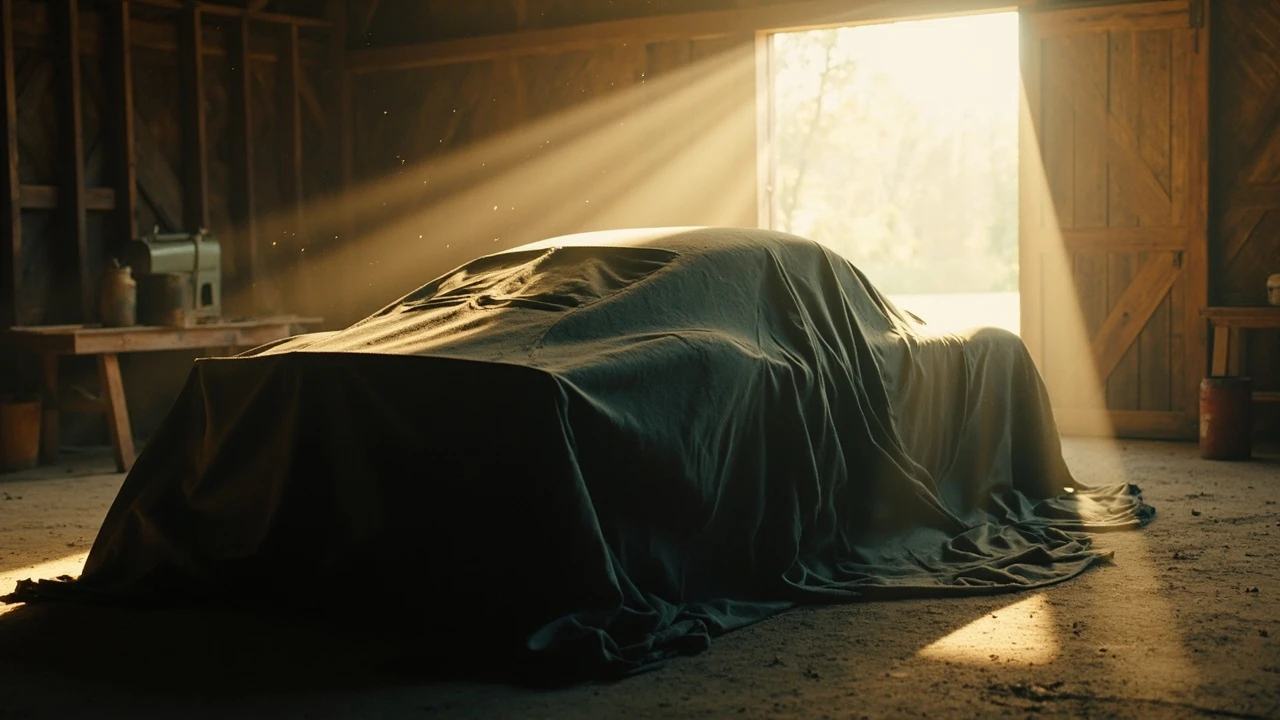
Forza 5 barn finds: what the system actually does in Forza Motorsport
Forza 5 barn finds is a phrase that circulates in racing-game communities every time a new Forza title lands, and it is worth stating the basic shape of the question up front. The original Forza Motorsport (often called Forza 5 by players, although the developer’s title for the Xbox One launch entry is simply Forza Motorsport) does not include a discoverable, on-map barn-find mechanic in the way that Forza Horizon 4 and Forza Horizon 5 do. Players searching for a hidden stash of unlocks underneath a tarp on the open-world map will not find one, because the game is built around closed circuit racing rather than an explorable open world. What does exist is a set of older, harder-to-acquire vehicles that behave like a barn find in the player’s mind: cars that take effort, knowledge, or progression to put in the garage.
That mismatch is the reason the question keeps coming up. New players hear the franchise’s reputation for surprise car unlocks, search for Forza 5 barn finds, and expect an analog of Horizon’s hidden barn mechanic. Understanding where that expectation comes from, how the real car-acquisition loop in Forza Motorsport works, and which cars in the older Forza catalog genuinely feel like a barn find is the practical task this article is built to support. Along the way the article also looks at how Turn 10 Studios structured progression, how community resources track rare cars, and what changed when later Forza titles reintroduced a more literal hidden-car feature.
Where the phrase “barn find” comes from in racing games
The term “barn find” in car culture is older than any game. The general concept of an undiscovered car sitting for decades in a garage, shed, or rural outbuilding, then resurfacing with a substantial collector value, is the basis of a real enthusiast subculture. The For additional context, Wikipedia article on the barn find describes how these vehicles were originally used and parked rather than sold, then later rediscovered with original paint, faded interiors, and decades of dust, and how collectors and restoration shops treat them as a distinct category of purchase.
Racing games have borrowed that idea and translated it into gameplay. The translation is rarely one-to-one. Some games literally place a covered vehicle on the map and reward the player for finding it. Other games keep the “rare, unexpected, contextual” feeling of a barn find but use a different mechanism, such as a seasonal event, a progression gate, a paid DLC pack, or a difficult series. The Forza franchise has done both at different times, which is the main reason the Forza 5 barn finds question keeps surfacing with several different intended meanings.
Real-world barn finds versus virtual mechanics
Real barn finds come with paperwork surprises, mechanical faults, original documentation, and risk. Virtual ones simulate only the experience the developer wants to highlight, usually surprise and a sense of reward. A racing game that puts a 1960s prototype under a sheet in a field is using the visual shorthand of a barn find to deliver a moment of discovery. A racing game that gates a similar car behind a long career mode is delivering rarity, but not discovery. Both can be called a “barn find” by the community even when the underlying mechanic is different. Keeping that distinction in mind is the only reliable way to make sense of the Forza 5 barn finds question.
The basic Forza 5 car-acquisition loop, and why no on-map barn exists
Forza Motorsport for Xbox One, released by Turn 10 Studios, is a circuit-only racing simulator. There is no open-world map in the game’s career structure, no drivable overworld between events, and no system of remote barns to discover while exploring. Car acquisition in the game is built around a different set of loops that are worth understanding in detail because they are the closest analog to what a player might call a Forza 5 barn find.
Buying cars with credits
Credits are the in-game currency earned by completing races, championships, and specific challenges. The in-game car catalog, the same one accessible from the main menu, allows players to spend credits on any vehicle that is not gated by other mechanics. This is the simplest and most common path to a new car. It is not a barn find. It is a marketplace, and the car shows up in the player’s garage immediately after the transaction.
Car-level progression and restricted classes
Some cars in Forza Motorsport are added to the dealership with a level requirement. The car itself has a level attached to it, often based on how the developer wants to gate it inside the broader progression curve, and the player needs to reach that level before the buy option appears. This produces a “you can see it but cannot buy it” effect that feels similar to spotting a car you want but cannot yet reach. Mechanically, however, it is a level gate, not a hidden discovery.
Bonus cars for completing specific events
Certain events in the career structure reward the player with a specific car upon completion. These are pre-defined, listed in the event description, and are part of the standard progression path. They are the closest functional analog to a discoverable bonus car, but they are not surprise unlocks either. The reward is announced in advance so that the player understands what they are working toward.
Time-limited and promotional unlocks
During the live operation period of the original Forza Motorsport on Xbox One, Turn 10 Studios ran a series of seasonal and promotional events that awarded specific cars for completing a particular Rivals event, a time trial, or a community challenge. These unlocks felt rare because they were tied to a window of time, and a player who missed them had to wait for a reissue. That limited availability is the most common feature that a player will describe as a “barn find” experience inside a circuit-only Forza game, because the car is not on the open map but it does require the player to know where to look and when to act.
Where the phrase “barn finds” usually means Forza Horizon, and why that matters
The bulk of player discussion about “barn finds” in 2024 and beyond is about Forza Horizon 4 and Forza Horizon 5, the open-world entries in the Forza franchise developed by Playground Games. Those games do include a literal barn-find mechanic: a small number of classic cars, each one hidden inside a barn somewhere on the open-world map, and each one revealed to the player through a notification that points to a specific area. Once the player drives into the discovery radius, the cutscene plays, the car is added to the garage, and the player can either restore it or drive it as-found.
That mechanic is not in the original Forza Motorsport. The mix-up is frequent because the Forza franchise as a whole is known for the feature, and a player who hears “Forza 5 barn finds” may actually be looking for the Horizon version of the feature under a different search term. The distinction matters when the goal is to find the right article, the right video, or the right guide.
Horizon 4 and Horizon 5 barn-find flow at a glance
- The player is notified after a specific amount of in-game progression that a barn find is available.
- The notification contains a general region on the open-world map, not an exact marker.
- The player drives into the discovery radius near the barn, the cinematic triggers, and the car is added to the garage.
- Some barns return in the late game, or are tied to specific DLC and expansion content.
This is genuinely an exploration mechanic. The original Forza Motorsport does not have an equivalent, which is why the Forza 5 barn finds query usually redirects a curious player toward the Horizon titles, or toward one of the more general “rare cars in Forza” resources that the community maintains.
The cars in Forza 5 that feel the most like a barn find, even without a map mechanic
Even without a hidden barn mechanic, several vehicles in the original Forza Motorsport reward extra effort in a way that the community has come to describe as “barn find” by analogy. These are the cars that are not impossible to get, but that show up only after a player pushes deeper into the game, understands the progression system, or returns during a specific event window. The list below is based on the structure of the game’s car catalog as it was released, not on any unverified later additions.
Manufacturer showcase cars from the launch roster
The launch car list in the original Forza Motorsport included a small number of vehicles that were not always present in the immediately accessible credit tiers. The Ferrari LaFerrari, the McLaren P1, and the Porsche 918 Spyder are the most obvious examples, with multi-million-credit price tags that meant a new player could not realistically own them within the first racing session. Reaching a credit balance that can buy one of these hypercars is a long-term goal, and the moment the player finally takes delivery of one tends to feel closer to a milestone than a simple purchase. Players often compare the experience to a barn find in spirit because the car feels earned rather than handed over.
Hard-to-find race-spec cars and homologation specials
Race-spec and homologation cars, the road-going versions built to satisfy a racing category, are another category that feels unusual in the garage. Cars like the Ferrari 458 Italia, the Aston Martin Vulcan (in its later Forza Motorsport appearances), the McLaren Senna, and the Porsche 911 GT2 RS tend to have price tiers that put them out of early reach, and they are sometimes gated behind dealer levels. The combination of high cost and a level requirement is the most “barn find” feeling the circuit-only game can produce, because the car stays just out of reach while the player works on the rest of the career.
Seasonal and promotional cars from the live service era
During the live service period of the original Forza Motorsport, Turn 10 Studios offered specific cars as rewards for completing a Rivals event within a particular week. Examples included a mix of track toys, vintage road cars, and a small number of head-turning classics. A player who missed the window could not earn the car from that Rivals event, which made the cars feel like a barn find later on, especially when the next opportunity was months away. Live service catalogs change over time, so the precise list of which cars were offered in which week is best confirmed against the in-game event log, the official Turn 10 Studios news posts, or a current community database such as the Forza Motorsport car list maintained on a community wiki.
Community-tracked rare cars versus in-game rarity
It is worth separating in-game rarity from community-tracked rarity. In-game rarity in Forza Motorsport is a function of credit price, level gate, or event lock. Community-tracked rarity is a function of the car being difficult to obtain now, either because a promotional window closed, because the game is no longer being updated, or because the car was sold in a one-time shop offer. A car that was once common can become rare, and vice versa, simply because the live service calendar has moved on. For a player who treats their garage as a long-term collection, this shift is the most realistic version of a barn find inside a circuit-only Forza game.
How to check whether a particular car is in Forza 5 today
Because the Forza franchise continues to release new entries and to add cars to existing titles through updates, the car list for the original Forza Motorsport has shifted since launch. A practical check involves a small set of reliable sources rather than memory, and a useful rule of thumb is to look for the car in three places in order.
- The in-game car catalog, which is the source of truth for the player’s own copy. If the car is there and the player can afford it, the purchase is immediate.
- The official Forza Motorsport car list, either through the in-game news feed or through the official Forza support pages maintained by Turn 10 Studios and Xbox Game Studios.
- A community-maintained database, typically a wiki page that tracks car additions, removals, and seasonal event cars across the live service period.
The community database is most useful for “where did this car go” questions, because the official channels tend to focus on current content and current events rather than historical state.
What the original Forza Motorsport did differently from later Forza games
Looking at the Forza franchise as a whole is the easiest way to understand the absence of an on-map barn-find feature in the original Forza Motorsport. Three structural choices are worth highlighting because they explain why the mechanic never appeared in the circuit-only game.
The game is a closed-track simulator, not an open-world racer
The original Forza Motorsport uses a menu-driven event structure with discrete tracks, a single career progression path, and a Rivals mode for asynchronous time trials. There is no overworld to drive through, no rural map to explore, and no realistic way to hide a barn on a closed circuit. The mechanic of an open-world barn simply does not fit the design, which is the structural reason it was never included.
Progression is menu-driven and event-based
Because the player is not exploring a world, the game’s sense of surprise comes from the event list itself, the reveal of a new car, the unlock of a new track, or the appearance of a new Rivals event. Barn finds in the open-world games serve a similar narrative function, but inside the original Forza Motorsport the equivalent moments are delivered through the event list, the season calendar, and the news feed rather than through a physical location.
Live service calendar takes the place of physical exploration
For a circuit-only Forza game, the live service calendar is the equivalent of an explorable world. New cars, new tracks, and new events show up on a schedule, and the player who logs in at the right time gets the car. A player who returns months later may find that several cars are no longer in the active catalog, which is what gives the experience its “barn find” quality in retrospect. The mechanic is different, but the emotional result is similar: a reward that arrives only because the player knew where and when to look.
Forza Horizon 4 and 5 barn finds, in detail, for comparison
For comparison, the open-world entries in the Forza franchise do include literal barn finds, and understanding how they work is the most reliable way to set reader expectations when someone is searching for Forza 5 barn finds and may be thinking about the Horizon titles.
Forza Horizon 4 barn finds
Forza Horizon 4 is set in a fictionalized version of the United Kingdom, with a shared open-world map that changes seasonally. Barn finds in that game are scattered across the map, and the player is notified through the in-game news system when one is available. The notification points to a general region, and the player has to drive to the location and trigger the cutscene. The cars in question are mostly classic and vintage vehicles, and the player’s choice is whether to drive the car in its as-found state or to send it through the game’s auto-restoration system.
Forza Horizon 5 barn finds
Forza Horizon 5 moves the franchise to a fictionalized Mexico, and the barn-find mechanic carries over with a larger roster of discovery cars. The notification, the regional hint, the discovery radius, and the cinematic are essentially the same as in Forza Horizon 4, with a small number of additional barns tied to DLC content and the two expansions. The list of barn-find cars in Forza Horizon 5 is the largest in the franchise so far, and the cars themselves range from a 1960s Mini to a small set of late-model performance vehicles.
Where the on-map barn-find mechanic would have to live in a Forza Motorsport title
For the original Forza Motorsport, the structural design would have had to change to host an on-map barn-find mechanic. The game’s design lacks a drivable world, and the menu-driven structure does not naturally support a “drive to a location” goal. The most realistic interpretation is that a barn find inside a circuit-only Forza game would have to be a Rivals event, a season reward, or a single purchase option that appears at a level gate, which is exactly the kind of feature the live service calendar delivered during the game’s active years.
Practical player steps when searching for rare cars in the original Forza Motorsport
For a player who is actively trying to expand the garage in the original Forza Motorsport and is using the phrase “barn finds” as shorthand for rare cars, the practical workflow is reasonably straightforward. The table below summarizes the main acquisition paths and what the player should expect from each. It is intentionally written in terms of the player’s actions rather than the developer’s internal terminology, so the categories stay useful regardless of how the in-game menus are labeled at any given moment.
| Acquisition path | What the player does | What it feels like | Common limitation |
|---|---|---|---|
| Direct credit purchase | Open the car catalog, pay the listed price, take delivery. | Standard shopping, no surprise. | Credit cost can be high for the top hypercars. |
| Level-gated purchase | Reach the listed player level, then buy the car. | Work toward a goal, then a reward. | Level can be a long climb for late-game cars. |
| Event reward | Complete a specific career event to earn the car. | A defined goal with a clear payoff. | The reward is announced, so the surprise is small. |
| Seasonal or promotional unlock | Complete a specific Rivals event during a calendar window. | Limited-time, easy to miss. | Window may close before the player reaches it. |
| Community-tracked rare | Search a community database for a car that is no longer in the active catalog. | The closest analog to a true barn find inside a circuit-only game. | Availability depends on reissue policy. |
The “community-tracked rare” row is the one that most closely matches the “barn find” feeling, because the player is not earning the car through the standard progression path. They are finding it through external knowledge and timing. For a player who is committed to the original Forza Motorsport, building a habit of checking the community wiki and the official Turn 10 Studios news posts is the most reliable way to convert external knowledge into a garage full of cars that genuinely feel like a find.
Forza franchise terminology: what to call each kind of car unlock
One of the reasons the Forza 5 barn finds question generates so many conflicting answers is that the Forza community has used the phrase loosely. The table below is an attempt to align the common community terms with the underlying mechanic so that a player reading older forum posts, video descriptions, or wiki entries can tell which version of the feature the post is actually talking about.
| Community term | Most common meaning | Game that fits the term best | Why the term gets used elsewhere |
|---|---|---|---|
| Barn find | On-map discovery of a covered vehicle inside a barn, usually a classic. | Forza Horizon 4, Forza Horizon 5 | The mechanic is iconic, and the term gets applied to any rare car that feels like a find. |
| Hidden car | A car that is not in the standard catalog, or that appears only during a special event. | Forza Motorsport live service era | The car is genuinely not in the regular credit shop, so it feels hidden. |
| Seasonal reward | A car tied to a specific calendar event or Rivals challenge. | Forza Motorsport, Forza Horizon 4, Forza Horizon 5 | Seasonal events are the most common “surprise car” feature across the franchise. |
| Promo car | A car offered to celebrate a launch, anniversary, or partnership. | Forza franchise wide | Promo cars are limited by definition and get treated as finds. |
| Level-gated car | A car that requires a minimum player level to purchase. | Forza Motorsport, Forza Horizon 4, Forza Horizon 5 | The car is visible but inaccessible, which players describe as “hidden” or “locked away”. |
Reading the table, the original Forza Motorsport fits the “hidden car,” “seasonal reward,” “promo car,” and “level-gated car” rows, and not the “barn find” row. That mapping is the cleanest way to give a useful answer to the Forza 5 barn finds question without misrepresenting what the game actually includes.
How Forza’s design philosophy treats “discovery” in a circuit-only game
Looking at how the original Forza Motorsport was designed helps explain why the developers leaned on a calendar of cars rather than a map of barns. The design philosophy is built around a few consistent choices, and each of them pushes the experience toward event-based discovery rather than map-based discovery.
Tracks are the protagonists, not the world
For a circuit-only Forza game, the track is the world. Players learn Suzuka, they learn Spa, they learn Laguna Seca, and the relationship between car and track is the core skill the game is teaching. There is no narrative reason to send the player on a drive through a fictionalized countryside to find a hidden car, because that drive would not be teaching the same skill. The hidden cars in the live service era arrive through a Rivals event tied to a specific track, which keeps the discovery tied to the same core skill the rest of the game is teaching.
Car list is curated rather than procedurally generated
Each Forza Motorsport car is hand-picked, modeled, and tested by the development team. A barn-find mechanic on a closed-track game would not add cars, it would only add a way to discover cars that are already in the catalog, so the design value of the mechanic is lower than it is in an open-world game where new areas of the map need reasons to be visited. Turn 10 Studios’ solution was to use the calendar to drive visits to specific tracks and modes, which is structurally similar but suits the game’s design.
Live service maintains the discovery moment after launch
The original Forza Motorsport’s live service calendar extended the discovery moment well past launch. A new player returning to the game months after release would see a news feed full of new cars, new events, and new Rivals, which is the equivalent of a barn mechanic in terms of emotional impact. The original mechanic has aged out for the most part because the live service period has ended, but the catalog and the event history remain in the game for the players who return.
Choosing the right Forza game for a player who actually wants barn finds
For a player who is reading this article because they want the on-map barn-find experience, the practical question is which Forza title to play. The table below summarizes the three modern Forza titles and how each one handles hidden cars. It is intentionally limited to the modern entries, because the older Forza Motorsport entries on the original Xbox used a different feature set and are not a useful comparison for a player who is searching for the barn-find mechanic.
| Title | Developer | World structure | Hidden car feature | Best fit for the search “Forza 5 barn finds” |
|---|---|---|---|---|
| Forza Motorsport (Xbox One) | Turn 10 Studios | Circuit only, no open world. | Seasonal, event, and level-gated cars only. | Low. Players who want on-map barn finds should look elsewhere. |
| Forza Horizon 4 | Playground Games | Open world, shared servers, four seasons. | On-map barn finds scattered across the UK map. | High. The mechanic is in the game and is the most likely intended target. |
| Forza Horizon 5 | Playground Games | Open world, shared servers, large biome map. | On-map barn finds, more than its predecessor, plus DLC barns. | High. Largest barn-find roster in the franchise so far. |
Reading the table, Forza Horizon 4 and Forza Horizon 5 are the right answer for a player who wants the mechanic that the original Forza Motorsport does not include. A useful rule of thumb is that “Forza 5” in casual speech often refers to whichever Forza game the speaker most recently played, and the search term in the question is most likely a player who has heard about the Horizon feature and is trying to figure out which Forza title has it.
Forza 5 barn finds versus Forza Horizon 5 barn finds: a side-by-side mechanic comparison
For a player who is choosing between the two games based on the feature, a side-by-side comparison is more useful than a generic table. The list below pairs the structural choices inside the original Forza Motorsport with the matching choices inside Forza Horizon 5, so the differences are easy to follow.
- World: closed-track circuit in Forza Motorsport, open-world Mexico in Forza Horizon 5.
- Discovery: news-feed notification pointing to a Rivals event in Forza Motorsport, in-game news pointing to a map region in Forza Horizon 5.
- Trigger: finishing a specific event in Forza Motorsport, driving into the discovery radius in Forza Horizon 5.
- Reward: a car added to the garage, often a modern or vintage performance car, in Forza Motorsport, and a classic car in a barn, typically older, in Forza Horizon 5.
- Replay: limited by the live service calendar in Forza Motorsport, persistent on the map in Forza Horizon 5.
Forza Horizon 5 is the better fit for a player who specifically wants the on-map mechanic, and Forza Motorsport is the better fit for a player who wants the structured, circuit-based progression that Turn 10 Studios is known for.
Community resources that track rare cars in the Forza franchise
Because the Forza franchise has a long history, several community resources track the full car list across all titles, including cars that are no longer in the active catalog. A player who wants to confirm whether a specific car is in the original Forza Motorsport today can use these resources in addition to the in-game catalog.
- The official Forza support pages maintained by Turn 10 Studios and Xbox Game Studios, which describe the active car list and the active event calendar.
- Community-maintained wikis, which track historical car additions, removals, and seasonal rewards across the live service period of each Forza game.
- Forza community Discord servers and subreddit megathreads, which often have current information about limited-time events and recent catalog changes.
- YouTube channels and community databases that track car lists by category, including “rare” and “seasonal” tags that approximate the barn-find feeling.
Using more than one of these resources is the safest approach, because the in-game state can change after a server update and the official channels sometimes lag the actual game state by a day or two.
What the Forza 5 barn finds question is really asking, in plain language
Stepping back from the details, the Forza 5 barn finds question is usually one of three things, and the practical answer depends on which one applies.
- The player wants to know whether the original Forza Motorsport has a literal on-map barn-find mechanic, similar to Forza Horizon 4 or Forza Horizon 5. The answer is no, the original Forza Motorsport is a circuit-only game and does not have a drivable world to hide barns in.
- The player wants a list of the rare or hard-to-get cars in the original Forza Motorsport, which is the closest analog the game offers. The answer is that rare cars come from the level-gated catalog, the event rewards, and the historical live service calendar, and a community database is the best way to find them.
- The player is actually looking for Forza Horizon 4 or Forza Horizon 5 barn finds, but is using “Forza 5” as the search term. The answer is that both Horizon titles have the on-map mechanic, and Forza Horizon 5 has the largest roster of discovery cars so far.
Any of the three answers is a useful response to the question, and the rest of this article supports all three by mapping the Forza 5 barn finds phrase to the underlying mechanic.
Frequently asked questions
Does Forza Motorsport (Xbox One) have barn finds?
No. The original Forza Motorsport for Xbox One is a closed-track racing simulator and does not have an open-world map, so there is no on-map barn-find mechanic. The closest analog is the set of level-gated, event-reward, and seasonal cars that appeared during the game’s live service period. If a guide, video, or forum post says otherwise, it is most likely describing a different Forza title or using the phrase “barn find” loosely.
Are barn finds in Forza Horizon 4 and Forza Horizon 5 the same as in older Forza games?
No. The on-map barn-find mechanic is specific to the Forza Horizon sub-series and was introduced in Forza Horizon 3, refined in Forza Horizon 4, and expanded in Forza Horizon 5. The earlier Forza Motorsport entries on the original Xbox and Xbox 360 do not include the mechanic in any form, and the original Forza Motorsport on Xbox One does not include it either. Players who want the mechanic should look at the Horizon titles, not at the circuit-based Forza Motorsport entries.
How many barn finds are in Forza Horizon 5?
Forza Horizon 5 includes a larger barn-find roster than any earlier Forza title, with a mix of classic and modern cars tied to the base game and the two expansion packs. The exact number has changed with updates, so the current count is best confirmed against the in-game news feed, the official Forza support pages, or a current community wiki. As of the most recent public catalog the number is in the high teens, with additional barns available through the expansions.
Can I get barn find cars in Forza Horizon 5 without the expansions?
Yes. The base-game barns in Forza Horizon 5 are available to all players and do not require either of the two expansion packs. The expansion barns require the corresponding expansion purchase, and a small number of additional barns have been added through free updates and seasonal content. The general rule is that base-game barns are part of the standard edition, and expansion barns are tied to the expansion purchase.
What is the most expensive car in Forza Motorsport for Xbox One?
The most expensive cars in the original Forza Motorsport are the hypercar-tier models, including the Ferrari LaFerrari, the McLaren P1, and the Porsche 918 Spyder. The exact credit cost shifts with updates, so the current price is best confirmed against the in-game catalog. The high cost is the main reason these cars tend to be described as “barn finds” in spirit, because reaching a credit balance that can buy one is a long-term goal for a new player.
Are seasonal cars in Forza Motorsport still available?
Seasonal and promotional cars in the original Forza Motorsport are tied to the live service calendar that ran during the game’s active years. After the live service period ended, most of those cars are no longer obtainable through the original event, although a number of them have been reissued through later in-game catalogs and community events. The current state of any specific seasonal car is best confirmed against a current community database or the in-game catalog.
What is the difference between a barn find and a seasonal reward in Forza?
A barn find is an on-map mechanic in the Forza Horizon titles where the player drives to a discovery radius and triggers a cinematic to add a covered vehicle to the garage. A seasonal reward is a calendar-tied car that the player earns by completing a specific event during a defined window. Barn finds are about physical exploration on a map, while seasonal rewards are about timing and event completion. The original Forza Motorsport uses the seasonal reward pattern rather than the barn-find pattern, which is the main reason the two are often confused in casual discussion.
Will a future Forza Motorsport game include a barn-find mechanic?
Turn 10 Studios has not publicly committed to adding an on-map barn-find mechanic to a future Forza Motorsport title. The franchise’s design history suggests that the open-world mechanic is closely tied to Playground Games’ Forza Horizon sub-series, while Turn 10 Studios’ Forza Motorsport series continues to focus on closed-circuit simulation. A future Forza Motorsport entry could include a different kind of discovery feature, but the on-map barn find is currently associated with the Horizon titles and is unlikely to be copy-pasted into a circuit-only Forza Motorsport game without a meaningful design change.
Where can I find a current Forza 5 car list?
The current Forza 5 car list, whether that means the original Forza Motorsport on Xbox One or Forza Horizon 5 on Xbox Series X and Xbox One, is best confirmed in three places. The first is the in-game car catalog, which is the source of truth for the player’s own copy. The second is the official Forza support pages maintained by Turn 10 Studios and Xbox Game Studios. The third is a community-maintained wiki, which tends to track historical additions and removals that the official channels do not always surface. Using all three together gives a complete picture of the current and historical car list for the title in question.
Is the original Forza Motorsport still worth playing in 2026?
That depends on what a player is looking for. The original Forza Motorsport is a closed-track racing simulator with a strong physics model, a deep career structure, and a car list that includes a long tail of rare and unusual vehicles. Its live service calendar has ended, which means a returning player will not see new content, but the existing car list, the existing track list, and the existing Rivals mode are all still playable. For a player who wants on-map discovery and seasonal surprises, Forza Horizon 5 is a better fit. For a player who wants a focused circuit-only experience with a deep car list, the original Forza Motorsport remains a strong option.

Leave a Reply