

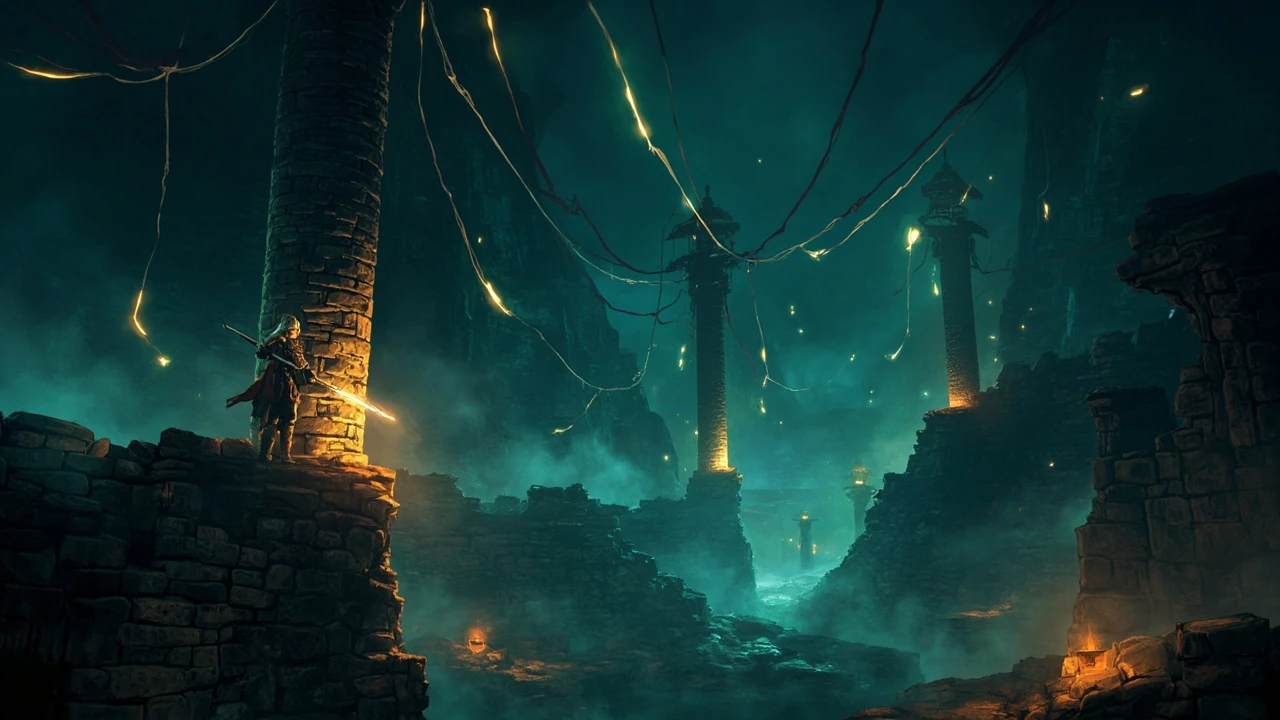
Silksong Act 3: what is actually known about the final chapter
Ask any Metroidvania fan what they are waiting for in 2026 and the answer is rarely a launch trailer. More often it is the same question, repeated in forums, Discord servers, and developer interviews: when does Silksong Act 3 begin, and what does it actually contain? The honest answer is that Team Cherry has not committed to a public Act 3 roadmap, but the studio has shared enough structural information about the game’s three-act design, and the wider Metroidvania genre has shipped enough comparable final acts, for a careful editorial breakdown to be useful. This article separates what the developer has confirmed from what players are speculating about, then explains how a final act in a hand-drawn Metroidvania of this size is typically structured, why Act 3 often becomes the most mechanically interesting chapter, and where readers should watch for the next verifiable update.
How Team Cherry has described the three-act structure
Team Cherry first outlined the three-act design publicly during the original Silksong reveal cycle and has reinforced it in developer updates since. The studio has repeatedly described the game as a self-contained experience that starts in a new kingdom, builds toward a mid-game escalation, and resolves in a dedicated final act rather than an extended endgame mode. The team has been careful not to use the term “chapter” interchangeably with “act,” because their pipeline treats the act divisions as production milestones that gate the majority of the mechanical design, not just the cutscene order.
Three details matter for anyone tracking Silksong Act 3 specifically. First, the acts are not pure story beats. They are linked to map regions, enemy rosters, and the order in which traversal abilities are unlocked. Second, the acts are tied to the studio’s QA gates: Act 1 was used to validate the core movement and combat loop, Act 2 introduced the bulk of the side content and traversal upgrades, and Act 3 is where the studio concentrates boss density, ability rebalancing, and the final difficulty curve. Third, the developer has said that the acts are not equal in length. The pattern across comparable hand-drawn Metroidvanias, and the pattern Team Cherry has hinted at in past updates, is that the third act is the shortest in raw area but the densest in mechanical content.
Why a final act matters mechanically in a Metroidvania
In a Metroidvania, the final act is rarely just a new region to explore. It is the chapter in which the design team assumes the player has internalized every traversal ability, every healing economy, and every enemy archetype. Once that assumption holds, the developers can reintroduce earlier enemies with new behaviors, mix previously separate arenas into shared spaces, and add optional content that is mechanically unfair without the player’s full kit. The pacing logic is why final acts in this genre tend to feel different even when the art style stays consistent.
For Silksong Act 3, that logic has several practical consequences. The combat system that the first two acts teach against single-enemy encounters can be reconfigured around crowd control, and the traversal that the player unlocked at the end of Act 2 becomes the baseline mobility that Act 3 challenges assume. Optional bosses in Act 3 can be designed around a fully upgraded kit because the developer knows the player has had access to those upgrades for the entire previous chapter.
The structural role of a final act in a Metroidvania
Game design references for the final-act role are easy to find in the genre. They share three characteristics that the table below uses to compare them with the design space that Silksong occupies. None of these games is a direct template for Silksong, and Team Cherry has not described Act 3 in these terms, but the comparison is useful for understanding what kind of mechanical pressure a final act is meant to deliver.
| Design lever | Typical Act 1-2 use | Typical Act 3 use | Why it matters for Silksong |
|---|---|---|---|
| Enemy density | Introduce archetypes one at a time | Stack two or more archetypes in shared arenas | Pressures the silk-based combat and healing economy together |
| Traversal abilities | Unlock and rehearse each ability in isolation | Combine abilities into chained sequences the early game never required | Matches Team Cherry’s earlier statements about late-game platforming |
| Optional bosses | Reward exploration with combat variety | Reward mastery with bosses that counter specific playstyles | Encourages build experimentation in the late game |
| Map regions | Broad, readable silhouettes | Tighter, more vertical, and more interconnected | Reinforces the studio’s hand-drawn vertical design language |
| Narrative pacing | Introduce the central conflict | Resolve the central conflict and present optional epilogues | Keeps the third act from being a pure side content dump |
The table is a structural sketch, not a confirmed feature list. The columns describe the genre’s typical use of each lever, and the rightmost column is an editorial interpretation of why that lever would matter to a game of Silksong’s scope. Team Cherry has not published a feature-by-feature Act 3 roadmap, and any specific claim about a boss, region, or ability needs to be sourced from an official update before it can be treated as more than a reasonable expectation.
What Team Cherry has confirmed, and what is still speculation
Keeping confirmed information separate from speculation is the single most useful habit for tracking a game in long development. The list below organizes the most important updates into a verifiable layer and a speculative layer. Treat the verifiable items as the source of truth, and treat the speculative items as discussion material that should be rechecked against each new official communication.
- Confirmed: Silksong is a standalone sequel, not a Hollow Knight expansion, and the three-act structure applies to its own story rather than to a continuation of the Hallownest timeline.
- Confirmed: Hornet is the playable protagonist, with a move set built around silk-based abilities, a needle weapon, and tools that replace the spells from the first game.
- Confirmed: The game is being developed for PC and consoles simultaneously, with a release date that has not been publicly re-announced since the original reveal window.
- Confirmed: The studio has shipped public demos and festival builds, which are not the same as a release date and should not be read as a launch signal.
- Speculative: Specific Act 3 boss rosters, hidden areas, and ability names that have appeared in fan datamines, internal code references, or wishlist posts. None of these have been confirmed by Team Cherry.
- Speculative: Difficulty claims, length estimates, and ending counts that have been inferred from trailers without supporting developer statements.
- Speculative: Platform exclusivity windows, pricing tiers, or special editions that have not appeared in an official storefront listing.
Reading order matters here. The first four items are useful even for a developer who is not a fan of the game, because they describe the production shape of a multi-year Metroidvania project. The last three items are useful only for community discussion, and a careful editor will not import them into an article that aims to be a reference.
Reading the official communications without overreading them
The original Hollow Knight framed its world as a continuous descent into Hallownest, and Silksong has been described by its developers as a fully separate story built around the same design language. Act 3 sits at the end of that structure, and understanding it requires understanding the two acts that come before it. If you are a developer thinking about how to pace a three-act Metroidvania, a designer studying how final chapters can reweight early-game systems, or a player who wants to read the next patch note without being misled by a wishlist, the sections below are organized to support each of those reading paths.
Team Cherry’s communication style is unusually quiet for a studio of its size. That quiet is part of why Silksong Act 3 speculation has filled the gap. The studio has used a small number of channels, and each channel has a different reliability weight when an editor is trying to summarize what is actually known. A short list of the most reliable signals, in order of how much editorial weight they can carry, looks like the following:
- Direct developer posts on the official Team Cherry channels, including the studio blog and verified social accounts.
- On-stage interviews at game festivals where the developer is speaking on the record.
- Festival demo builds, which confirm a feature is running on target hardware but do not confirm a release window.
- Press coverage that quotes a developer directly, ideally with a timestamp and a transcript link.
- Retailer and storefront listings, which confirm distribution plans but not feature lists.
- Community datamines, internal references, and rumor posts, which are useful for community discussion but should not be presented as fact in an editorial article.
For an article about Silksong Act 3 specifically, the safest editorial practice is to keep claims grounded in the first three categories and to flag the rest as community observation. The official wiki pages for the series, including the differences and new features guide for Hollow Knight Silksong, are useful for cross-checking the parts of the design that have been described in developer interviews or shown in demo builds.
What the previous Hollow Knight taught the studio about a final act
The first Hollow Knight did not have a numbered Act 3, but it had a content drop that functioned like one. The update introduced a new boss, a new ending, and a series of optional challenges that assumed the player had already finished the main path. That post-launch content is the closest reference point Team Cherry has shipped, and it shapes a lot of fan expectations about how a structured Act 3 would behave.
Three lessons from the original game’s expansion are worth carrying forward. First, the post-launch content was designed for replay value rather than first-time completion, which is a useful reminder that a final act in a Metroidvania can serve experienced players without changing the main story path. Second, the update added mechanical depth by recombining existing abilities rather than adding entirely new traversal tools, which is consistent with how Team Cherry has described Silksong’s combat design. Third, the update was paired with patch notes that documented the balancing work, which is the kind of discipline a player can reasonably expect from a final act in Silksong if the studio follows its own pattern.
How a Silksong Act 3 might reshape combat, by design intent
Combat design in a Metroidvania is a useful lens for thinking about a final act, because the combat system is what the player carries into every encounter. The first two acts of a Metroidvania teach a small number of core verbs: attack, dodge, heal, and use a limited resource. The third act tests whether those verbs hold up under pressure, and the design moves that matter most are the ones that change how the verbs interact rather than the ones that add new verbs.
For Silksong specifically, the verbs the studio has shown in trailers and demos include needle combos, silk-powered abilities, tool-based utility, and a healing economy that depends on the player’s silk reserves. Each of these verbs has a different cost, a different recovery profile, and a different risk-reward shape. The list below summarizes how a final act typically pushes each verb, and how that pattern would map to a Silksong-style combat system. None of the moves listed are confirmed for Act 3, but the underlying design logic is the same one the studio has used in earlier work.
- Needle combos: Act 1-2 teaches the rhythm of three-hit and aerial sequences. Act 3 typically reweights enemy recovery windows so that committing to a full combo opens the player to a counter that earlier enemies could not deliver.
- Silk abilities: Act 1-2 introduces each ability in a safe environment. Act 3 typically places two or more elite enemies in shared arenas, forcing the player to spend silk on the right target rather than hoarding it for a single finisher.
- Tools: Act 1-2 provides tools as exploration aids. Act 3 typically requires at least one tool to handle a specific encounter, which means the player has to plan their tool loadout for the encounter rather than improvising it.
- Healing economy: Act 1-2 punishes greedy healing. Act 3 typically reduces the safe windows for healing and adds enemies that punish the player for standing still, which makes the silk-based healing system a more active resource.
- Optional bosses: Act 1-2 rewards exploration with side content. Act 3 typically rewards mastery with optional bosses that counter a specific playstyle, encouraging the player to maintain multiple build options rather than committing to one.
Read this list as a description of how a Metroidvania final act usually behaves, not as a feature list for Silksong Act 3. The verbs are real and are part of the studio’s public design language. The specific encounters and balance numbers are not confirmed, and any article that names a particular Act 3 boss as confirmed is reading too much into the available evidence.
How to follow Silksong Act 3 news without burning out
Long development cycles create a specific problem for players and for developers who want to study the project’s communication pattern. Attention becomes scarce, misinformation becomes cheap, and a wishlist post can circulate as if it were a roadmap. A small number of habits make it easier to keep up with the actual news cycle without spending more time on it than the game deserves.
The list below is not exhaustive. It is a set of editorial habits that hold up across long-cycle indie releases, and that map cleanly to the way Team Cherry has communicated so far.
- Anchor on the developer’s own channels first, and treat anything that does not come from those channels as commentary rather than news.
- Track the date of every claim, and prefer claims that include a date over claims that have been circulating for years without a fresh source.
- Separate what is shown on screen, what is described in an interview, and what is implied by a trailer. Each category has a different reliability weight, and the editor’s job is to keep them separate.
- Watch for patch notes and devlog screenshots that include UI text, because UI text is harder to fake than trailer footage and often reveals a feature in motion.
- Be skeptical of internal data leaks. A leaked asset is not a confirmation, and a leaked feature is not a release date.
- If a piece of news does not change what a player or developer should do today, it is not news for editorial purposes. Save it for the next update cycle.
What a developer can learn from how Silksong Act 3 is being communicated
Even readers who are not interested in Silksong as a game can extract useful production lessons from how Team Cherry is managing the final act of a long-cycle Metroidvania. The studio has chosen a communication rhythm that prioritizes signal over volume, and that rhythm has consequences for how a player base forms, how expectations are managed, and how a final act can be positioned without overpromising.
Three production lessons are worth taking away. First, the studio has used a small number of high-signal channels rather than a large number of low-signal ones, and that choice has kept the player base informed without exhausting the development team. Second, the studio has separated act-level structural information from feature-level implementation details, which makes it possible to talk about the game’s shape without committing to specific bosses, areas, or balance numbers. Third, the studio has been willing to delay a release rather than ship a final act that does not match the rest of the game, which is a more expensive choice in the short term but a more durable one in the long term.
A production-level comparison of communication strategies
The table below compares the communication pattern Team Cherry has used with two other long-cycle indie strategies. It is a production observation, not a value judgment, and the columns describe how each strategy typically handles the kind of decisions a final act forces a studio to make. Use the table as a way to organize a production discussion, not as a ranking.
| Decision | Team Cherry’s pattern | High-volume update pattern | Silent development pattern |
|---|---|---|---|
| Update frequency | Low, with high-signal posts when a milestone is reached | Frequent, with smaller progress notes | Almost none, with one large reveal at release |
| Player expectation management | Sets structural expectations without committing to dates | Sets feature expectations with dates, accepts more rollbacks | Sets no expectations, accepts a noisier launch reaction |
| Resource cost of communication | Low, leaves more time for development | Higher, requires a dedicated community lead | Lowest, but leaves the studio exposed to rumor cycles |
| Risk of miscommunication | Lower per-post, but a single post carries more weight | Higher per-post, but each post carries less weight | Effectively all weight sits on the launch reveal |
| Best fit for a final act | Strong, if the act is treated as a structural milestone | Strong, if the studio can absorb community management | Weak, unless the act is small enough to be surprise content |
The rightmost column is empty for a reason. The silent development pattern works for studios that ship a single, well-bounded expansion rather than a multi-year sequel. For a game of Silksong’s scope, a silent development pattern would make the final act harder to position, because the player base would not have a frame of reference for what the act is supposed to deliver.
What to watch for in the next official Silksong Act 3 update
Speculation is not the same as a watchlist. A watchlist is a small, prioritized set of signals that would actually change what a reader should believe, and it is the only honest way to summarize the news cycle around a game that has been quiet for a long time. The list below is the set of signals that would justify a fresh article or a substantial update to an existing one. Until one of these signals appears, the editorial position is that Silksong Act 3 is a structural part of the game that the studio has not yet detailed in public.
- An official developer post that names Act 3 specifically, describes its mechanical role, and confirms a release window for the chapter.
- A festival demo or hands-on preview that includes content from the final act, ideally with a developer walkthrough rather than a press-only build.
- A patch note or devlog screenshot that shows new UI strings, new boss names, or new map regions that are clearly labeled as Act 3 content.
- An interview in which a Team Cherry developer explicitly describes the difficulty curve, length, or structure of the third act.
- A release date announcement that scopes the third act as a day-one feature, a day-one patch, or a post-launch addition.
If none of these signals appear, the responsible editorial position is to keep Silksong Act 3 framed as a planned structural element, not a confirmed feature set, and to treat any source that says otherwise as a community observation rather than news.
A short checklist for tracking Silksong Act 3 responsibly
The checklist below is a quick reference for readers who want to keep their own notes on the game without falling into a wishlist loop. It is short on purpose, and each item is something a reader can verify against an official source in a few minutes.
- Confirm that any new claim is from a Team Cherry post, an on-stage interview, or an official storefront listing.
- Note the date of the claim, and prefer the most recent dated source over a circulating older one.
- Separate what is shown, what is described, and what is implied, and weight them differently in your own notes.
- Flag any claim that depends on a leaked asset, a fan datamine, or an internal reference, and treat it as unconfirmed.
- Watch for a fresh signal from the watchlist above before publishing or sharing a Silksong Act 3 update.
How this article fits into a wider GameDev reading list
Long-cycle Metroidvania development is one of the more useful case studies a GameDev reader can study, because the genre is small enough to compare directly and the production timelines are long enough to make the communication pattern matter. Silksong Act 3 is a useful entry point for that case study because the studio has been unusually consistent in what it has chosen to communicate, and the gaps in that communication are themselves a data point. The sections above are organized so that a developer can read the structural sections, a designer can read the combat intent sections, a producer can read the communication pattern sections, and a player can read the watchlist without having to wade through the rest.
For readers who want to keep their context broad, the site has other pieces that sit next to this one. A look at how a studio handles Roblox Jujutsu Infinite codes and the anime grind loop is a useful contrast in communication style, and a practical walkthrough of RDR2 trapper locations, pelts, and gear shows how a long-cycle open-world game handles optional content in a way that is similar in spirit to what a final act in a Metroidvania is meant to deliver.
Frequently asked questions
Has Team Cherry officially confirmed a Silksong Act 3?
Team Cherry has confirmed that Silksong uses a three-act structure, but the studio has not published a detailed public breakdown of Act 3. The third act is part of the game’s design, and it will be the chapter that resolves the story the first two acts set up, but specific features, regions, and bosses for Act 3 have not been confirmed in any official post or interview.
When will Silksong Act 3 be playable?
There is no public release date for Act 3 specifically, and the studio has not separated the act into a post-launch update in any official communication. The current expectation, based on the way Team Cherry has described the three-act design, is that the third act will ship as part of the full game rather than as a separate update, but that is an interpretation rather than a confirmed release plan.
Is Silksong Act 3 the final chapter of the game?
Within the three-act structure, Act 3 is the final act of the main story. Whether the studio adds post-launch content, optional bosses, or a separate epilogue after Act 3 is a decision the team has not announced, and the safer reading is to treat Act 3 as the end of the main path and treat any extra content as unconfirmed until the studio says otherwise.
How long is Silksong Act 3 expected to be?
The studio has not given a public length for Act 3, and fan estimates should be treated as community observation. The pattern in comparable Metroidvanias is for the final act to be shorter in raw area than the second act but denser in mechanical content, but that is a pattern in the genre rather than a feature list for Silksong.
Will Silksong Act 3 add new traversal abilities or only rebalance existing ones?
Team Cherry has not described the ability set for Act 3. The studio’s earlier statements about the silk-based ability system suggest that new abilities are more likely to appear in the second act, when the player is still building out the core kit, while the third act is more likely to test the abilities the player already has. That is an interpretation of the design language, not a confirmation of the ability list.
Where should I watch for the next Silksong Act 3 update?
The most reliable sources are Team Cherry’s official channels, including the studio blog and verified social accounts, and on-stage interviews at game festivals. Festival demo builds are useful for confirming that a feature is running, but they are not release-date signals, and they should be read as development progress rather than as a launch announcement.
Can I trust fan datamines for Silksong Act 3 details?
Datamines are useful for community discussion, but they are not official confirmation. A leaked asset can show that a feature exists in a build, but it cannot confirm that the feature will ship, that it will ship in its leaked form, or that it belongs to Act 3 rather than to a cut or post-launch addition. Treat datamines as unconfirmed, and wait for the studio to comment before treating a datamined feature as part of Act 3.
Is Silksong Act 3 harder than the first two acts?
The studio has not published a difficulty curve for Act 3, and difficulty claims in community posts are not a reliable source. The pattern in the genre is for the third act to be more demanding in terms of mechanical execution, but the specific difficulty numbers, the boss order, and the optional challenge list are all unconfirmed for Silksong until the studio says otherwise.
Will Act 3 be available on all platforms at launch?
Team Cherry has confirmed that Silksong is being developed for PC and consoles simultaneously, but the studio has not published a per-act platform plan. The default editorial position is that Act 3 will be available on every platform the game ships on, and any platform-specific carve-out should be sourced from an official storefront listing before it is treated as fact.
What is the safest way to write about Silksong Act 3 before the studio confirms details?
Keep claims grounded in the studio’s own posts, separate what is shown from what is described from what is implied, and flag any feature that depends on a leak, a wishlist, or a community observation. Until the studio publishes a dedicated Act 3 update, the responsible editorial position is to treat the third act as a structural element of the game, not as a confirmed feature set.

Leave a Reply